Sep 5, 2025 | Michael Jestadt
Types of Air Conditioners
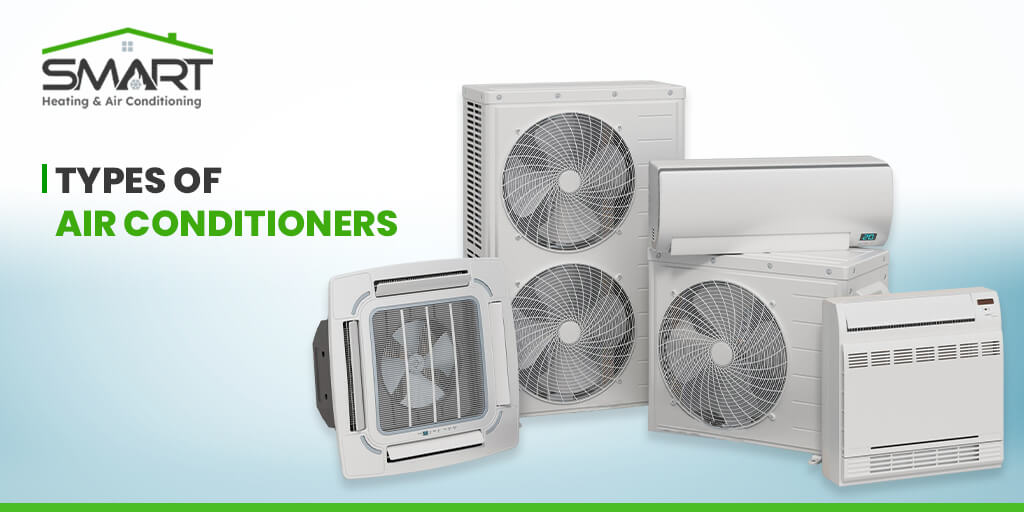
During the summer, you need an effective air conditioner to stay comfortable and cozy in your home. If you are thinking of buying a new AC for your home, it is important to choose the best one so that you won’t end up with issues related to it. It is also important to choose the right air conditioner type for your home. Most of us do not realise that there are many types of cooling systems available in the market, and each one has its pros and cons. In this article, we will explore the types of air conditioners and their pros and cons so that you can make an informed decision before buying one.
Different Types of Air Conditioner Systems
Knowing the types of air conditioners available in the market will make it easier for you to choose the right one. Each type has its own pros and cons, which makes it easier to find the suitable one according to your requirements. Whether you focus on energy saving, comfort, and affordability, there is an AC that suits your needs. Below are the most common air conditioner types for your home:
1. Central Air Conditioner
A central air conditioning system is ideal for homes with multiple rooms. If you want to control the temperature in multiple rooms at once, this is for you. A central air conditioning system consists of a split system, which is operated through ducts.
A split system contains two main units. One is an indoor unit that has an evaporator and air coils. Another one is the outdoor unit, which has a condenser and a compressor. Similar to any air conditioner, a central air conditioner also uses refrigerant to cool your home environment.
Use modern HVAC technology and integrate your system with a smart thermostat for a smart home experience.
Pros:
- Efficient
- Cost-effective
- Low-profile visible vents
Cons:
- High installation and maintenance costs
Ideal For:
- Homes with existing ductwork
- Larger homes
- Homeowners seeking invisible cooling solutions
2. Ductless Mini-Split
If you want an efficient and simple air conditioner without any ductwork, you can choose ductless mini split air conditioners. These systems are a better choice for modern homes. It is a combination of an outdoor unit and one or more indoor units. The indoor unit is fixed on a wall with air blowers.
The indoor and outdoor units are linked with the help of tubing through which the refrigerant flows. The smaller size of the indoor unit makes it easier to install in every room. These are one of the energy-efficient systems when compared to any other options. Still, if you are fixing one in each room, it can cost more to cover your entire home.
These systems come with a remote control. But if you have installed it with a smart thermostat, you can control it with a phone.
Pros:
- Flexible zone control
- Easier to install
- Affordable
- Energy efficient
- Easy to maintain
Cons:
- Noticeable units
- Higher upfront costs
- Need regular maintenance
Ideal For:
- Homes without ductwork
- Perfect for homeowners who want customizable zone cooling
- Those who want an easier and affordable option
3. Heat Pumps
A heat pump is a two-in-one system that can both cool and heat a home throughout the year. It is energy-efficient and similar to a split system, which transfers heat to or from the room to maintain a comfortable temperature. Heat pumps have indoor and outdoor units, similar to those of a split system. A heat pump is often preferred by homeowners seeking an all-in-one system to maintain a comfortable home environment.
Pros:
- Efficient
- Energy saving
- Eco friendly
- Can be used year-round
Cons:
- Higher outside temperatures can cause fluctuations in efficiency
- Expensive
- Need backup in severe cold climates
Ideal for:
- Homeowners looking for a flexible system all year round
- Those looking for an eco-friendly option
4. Geothermal Air Conditioning System
Geothermal air conditioning is a modern method that utilizes the earth’s insulation properties. The temperature of the earth under 4 or 6 feet remains constant regardless of the weather; the geothermal system utilizes this to heat or cool your home.
Setting up a geothermal system involves an intricate process of installing underground components. The system contains a pipe system with loops. The water circulates in the loops from the home and the ground.
Pros:
- Energy-efficient
- Reliable
- Works in any weather condition
Cons:
- Complicated installation
- Expensive
Ideal for:
- Long-time homeowners
- Areas with high energy costs
- Homes with limited outdoor space
5. Window Air Conditioner
If you need to cool a single room or a small area, a window air conditioner is a suitable option. They come in various sizes. Some brands also produce larger-sized window ACs that can cool a small house or an open space. A window AC is a single unit with all the components inside it. The back side of the unit pushes the heat outside, and the front part produces cold air. Window ACs have a removable filter that slides out of the unit, allowing you to clean or replace it yourself whenever necessary.
From the beginning, window ACs have been considered the common type of air conditioner for cooling smaller spaces.
Pros:
- Affordable
- Commonly available
- Easy installation
Cons:
- Bit noisy
- Blocks the window
- Less energy efficiency
Ideal for:
- People who need temporary and budget-friendly cooling solutions
- Single rooms and small spaces
6. Dual-Fuel Air Conditioner
It is also known as a dual-fuel HVAC system. This uses two types of fuel to heat and cool your home. This system is best for houses in rural areas where natural gas is not available and you have a limited supply of propane or oil. A duel-fuel air conditioner uses electricity along with a gas furnace or oil furnace. In this system, the traditional heat pump acts as a central air conditioning system. During the summer, the heat pump blows cooler air to maintain comfort in your home, and during winter, it provides the heat.
Pros:
- Reduces propane or oil costs
- Eco-friendly option
Cons:
- Expensive installation
- Some systems are difficult to convert
Ideal for:
- Those looking for heating and cooling in one system
- Areas with limited natural gas access
- Those looking for eco-friendly options
7. Portable Air Conditioners
Similar to window units, portable air conditioners come with their components inside them. The only difference is that a window unit is a fixed one, whereas a portable AC is a free-standing unit. You can move this system from one room to another without any hassle. You only need a power outlet and a window to let out the hot air with a hose. You can choose a portable air conditioner as a temporary solution or for places where installing a traditional air conditioner is challenging.
Pros:
- Easy to switch between rooms
- Easy installation
Cons:
- Can be noisy
- Not as energy efficient as window units, split systems, or central systems
- Need a window to let out hot air
Ideal for:
- Temporary and supplementary cooling
8. Floor-Mounted Air Conditioner
If you want a mini split but your room lacks the space to wall-mount the AC, this one is for you. A floor-mounted air conditioner works the same as a mini split. The indoor unit is installed on the floor, while the outdoor unit can be easily installed without any major preparation or downtime. The indoor unit is connected to the outdoor unit with tubing.
Floor-mounted systems cool the room more efficiently than any other systems, as the cool air directly blows to your level. The units should have open space around them for proper functioning; therefore, ensure they are free from any obstructions.
Pros:
- Easy to install
- Ideal for attics and rooms with limited upper wall space
- Energy efficient
Cons:
- Easily visible
- Occupies floor space
- Higher initial cost
Ideal for:
- Rooms with low ceilings or less wall space
- Homes without ductwork
9. Cassette Air Conditioner
A cassette air conditioner is generally installed in the ceiling of the room. It is more commonly used in commercial settings, apartments, and offices. Generally, cool air sinks down; these air conditioners spread the air evenly throughout the room, making cooling more effective.
Pros:
- Provide effective cooling
- Space saving
- Quite operation
Cons:
- A bit expensive
- Complicated installation
Ideal for:
- Offices
- Conference rooms
- Meeting halls
- Commercial spaces
- Showrooms
10. Evaporative Air Conditioner
They are also called evaporative coolers or swamp coolers. They are mostly used in areas with dry climatic conditions. It is a portable type of cooler and works through the evaporation of water. This device features a wet filter through which air is drawn and pushed into the room using a fan and motor. Using an evaporator air conditioner along with a traditional air conditioner is inefficient and not recommended.
Pros:
- Energy saving
- Improves moisture in the air
- Avaliable in various sizes
Cons:
- Large systems need professional installation
- Cannot be used with traditional AC
- Not recommended for humid areas
Ideal for:
- People living in dry climates
- Those looking for a budget-friendly and energy-saving option
Conclusion
Understanding the various types of air conditioners is crucial for selecting the most suitable one for your home. Each type has its pros and cons, like cost, energy efficiency, and personal requirements. At Smart Heating and Air Conditioning, we offer you a variety of equipment and financing options so that you can get the best air conditioning system in your budget. Our team will help you choose the right system and install it in your home to provide you with the best comfort all year long. Contact us today for a free quote.